


How to Care for PLA Prints
In this guide
A printed desk companion or personalized organizer needs a different care routine from a ceramic mug or a metal tool. The practical starting point is to identify the material, keep the intended use in mind and avoid treating a decorative print as a heat-resistant or load-rated part.
This guide is for everyday handling of finished PLA items. It is not a certification of a particular product, a repair procedure for safety-critical equipment or a replacement for an item’s own instructions. If a listing identifies another material, ask for material-specific advice rather than applying the PLA guidance automatically.
First, check what you own
Look at the product page or order information for the material and any special finish. An item may also include a metal ring, spring, adhesive, paint or other component that needs separate consideration. The printed body and an attached component do not necessarily tolerate the same cleaning method.
Save the product link with your order details. If you contact the workshop later, a photograph and that link are more useful than “the orange one.” Color alone cannot reliably identify the plastic or the construction, and different products may share a similar finish.
Choose a sensible home for the print
PLA has limited heat and UV resistance; a detailed indoor display is a different application from an object kept in a hot vehicle or exposed outdoors. Prusa’s PLA material reference describes these limitations. Do not use the printer’s extrusion temperature as a safe-use temperature for a finished object.
For your own setup, check the location rather than only the room: is the shelf directly above a radiator, beside a hot lamp or in a strong patch of sun? Move a desk print to a shaded, stable surface if that location becomes hot. Keep it away from open flames, stovetops and hot appliances. A printed pot cover should not be assumed to tolerate whatever heat a nearby device produces.
Use the least aggressive cleaning method first
For loose dust, start with a soft, dry brush or microfiber cloth. Support the body with one hand while cleaning with the other. Work around fine lettering, tails and joint openings instead of pushing across them. A gentle brush can reach a recess without using a pointed tool that could scratch or catch the surface.
For a plain, uncoated PLA surface, a soft cloth lightly dampened with cool water is a cautious next step. If necessary, use a little mild soap, wipe away residue with a separate damp cloth and dry gently. Test a discreet area first, especially if the finish is unknown. Do not soak a mixed-material item or let liquid collect around metal hardware.
Do not place an item in a dishwasher, microwave or boiling water unless that exact finished product is explicitly rated for the process. Avoid abrasive pads, solvent cleaners and attempts to smooth the surface with heat. Ask before cleaning a painted, coated or glued item; general plastic-care advice may not suit its finish.
Handle moving pieces at the joint
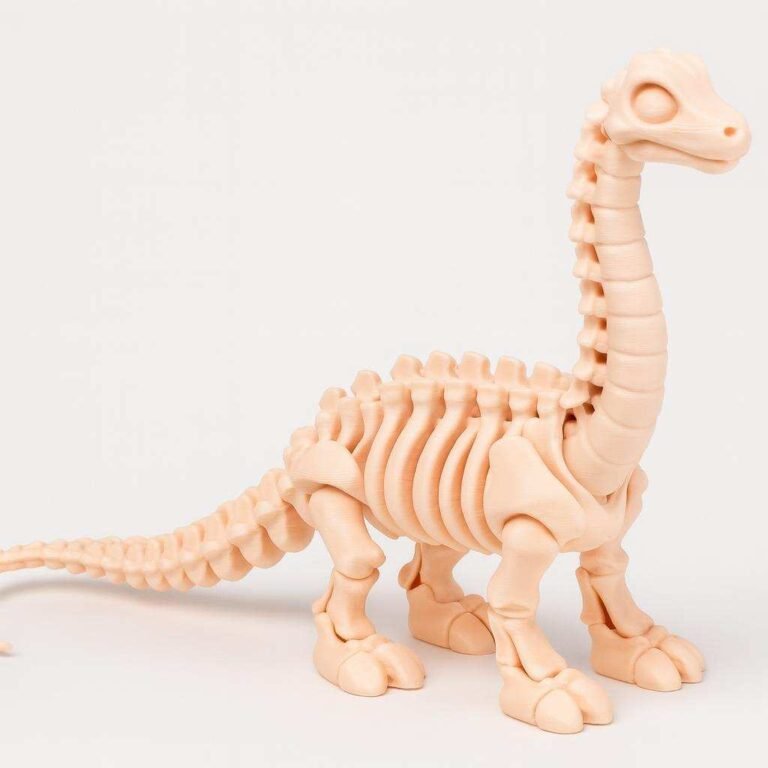
An articulated creature moves through designed links rather than by bending every part of its body. Place it on a clear surface and support the nearby segments while making a small movement. If a joint catches, stop and look for an obvious obstruction. Do not pull the head and tail apart to force a whole chain of joints to move.
Long horns, thin ribs and raised letters are not handles. Lift a model from its broad body or base. When carrying several prints together, keep keyrings and hard objects from knocking against delicate details. See our articulated-print guide for a closer explanation of movement and sensible handling.
Know when to stop using an item
Check for a new crack, loose hardware, a separating layer or a newly sharp edge after a drop or snag. A regular surface texture can be normal, while a crack that opens under gentle handling is a reason to stop. Do not repeatedly flex the area to demonstrate the problem; take a clear photograph instead.
Set damaged pieces aside where children and pets cannot reach them. Include an overall photograph, a close-up of the issue and a short description of what happened when asking for help. Do not assume an adhesive repair restores the original strength or makes an item appropriate for a more demanding use.
A simple care routine by situation
- A dusty display figure
- Support its base, brush gently and return it to a stable indoor spot.
- A frequently handled desk fidget
- Inspect the moving areas, clean only as appropriate for its components and stop if movement changes suddenly.
- An organizer with an ink mark
- Try the gentlest surface cleaning first; do not escalate to a strong solvent without advice.
- A print left in a hot location
- Let it return to room temperature without reshaping it, then inspect it. Ask about replacement if its fit or stability changed.
Pack it for the details it actually has
Before putting a print in a bag or storage box, remove loose contents and wrap it so projecting details cannot catch. Support articulated models in a relaxed position. Avoid tightly binding a thin tail or pressing a raised name against a hard surface. Place heavier belongings separately, not on top of the wrapped print.
If you are giving the item as a gift, include the product link and a short care note. “Indoor desk use; gentle cleaning; protect fine details” is more helpful than assuming the recipient knows how the item was made. Use the listing’s safety and intended-use information when deciding whether it suits a particular recipient.
Do not infer ratings from the material name
The word PLA by itself does not establish that a finished item is food-contact certified, dishwasher-safe, suitable for a baby or capable of supporting a particular load. Nor does plant-derived material mean a finished print belongs in garden compost. Follow local disposal rules and ask the relevant waste service what it accepts.
For a damaged item, uncertain finish or proposed new use, contact create@thewobbleworkshop.com with the product and order details. The store’s current returns policy governs order remedies; this care guide does not add a separate warranty.